


During hot seasons, fans serve as essential basic cooling devices in many households and offices, thanks to their convenience and energy efficiency. With technological advancements, fans have evolved from traditional AC motor models to smarter, more efficient smart DC fans. While both share the core function of "cooling via air circulation," they differ significantly in motor type, performance, and smart experience. Understanding these differences helps you choose a fan that precisely meets your needs, ensuring comfortable airflow while achieving the dual goals of energy conservation and convenience.
I. Core Differences: A Comprehensive Comparison from Motor to User Experience
The performance and user experience of a fan stem from differences in motor technology and functional design. The key distinctions between traditional electric fans and smart DC fans can be clearly seen across the following 6 critical dimensions:
Traditional Electric Fans (AC Asynchronous Motors)
Core Motor: Driven by alternating current (AC), with a relatively complex structure. Speed adjustment is achieved by changing voltage, resulting in low speed control precision.
Energy Consumption: High energy consumption. A typical 16-inch AC fan has a power rating of approximately 60-80W, consuming 0.6-0.8 kWh of electricity when running continuously for 10 hours. Long-term use leads to relatively high electricity costs.
Speed Regulation & Air Sensation: Limited speed gears (usually 3-5 gears: low, medium, high). The speed gap between gears is large, so the air sensation often jumps from "too weak" to "too strong," making it hard to find a comfortable balance. The airflow is relatively harsh; close-range use may cause discomfort from direct blowing.
Noise Control: High noise levels. Due to carbon brush friction and mechanical vibration during operation, AC motors typically produce 45-60 decibels of noise (more noticeable at high gears), which can easily disrupt sleep when used at night.
Smart Features: No smart functions. Speed and oscillation angle must be adjusted manually. Some older models even lack a timer function, requiring frequent manual operation during use.
Service Life & Maintenance: Short service life. The carbon brushes of AC motors are prone to wear; usually, after 3-5 years of use, issues like reduced speed and increased noise occur. The internal structure of the motor is complex, leading to high maintenance costs—faulty motors are often replaced directly.
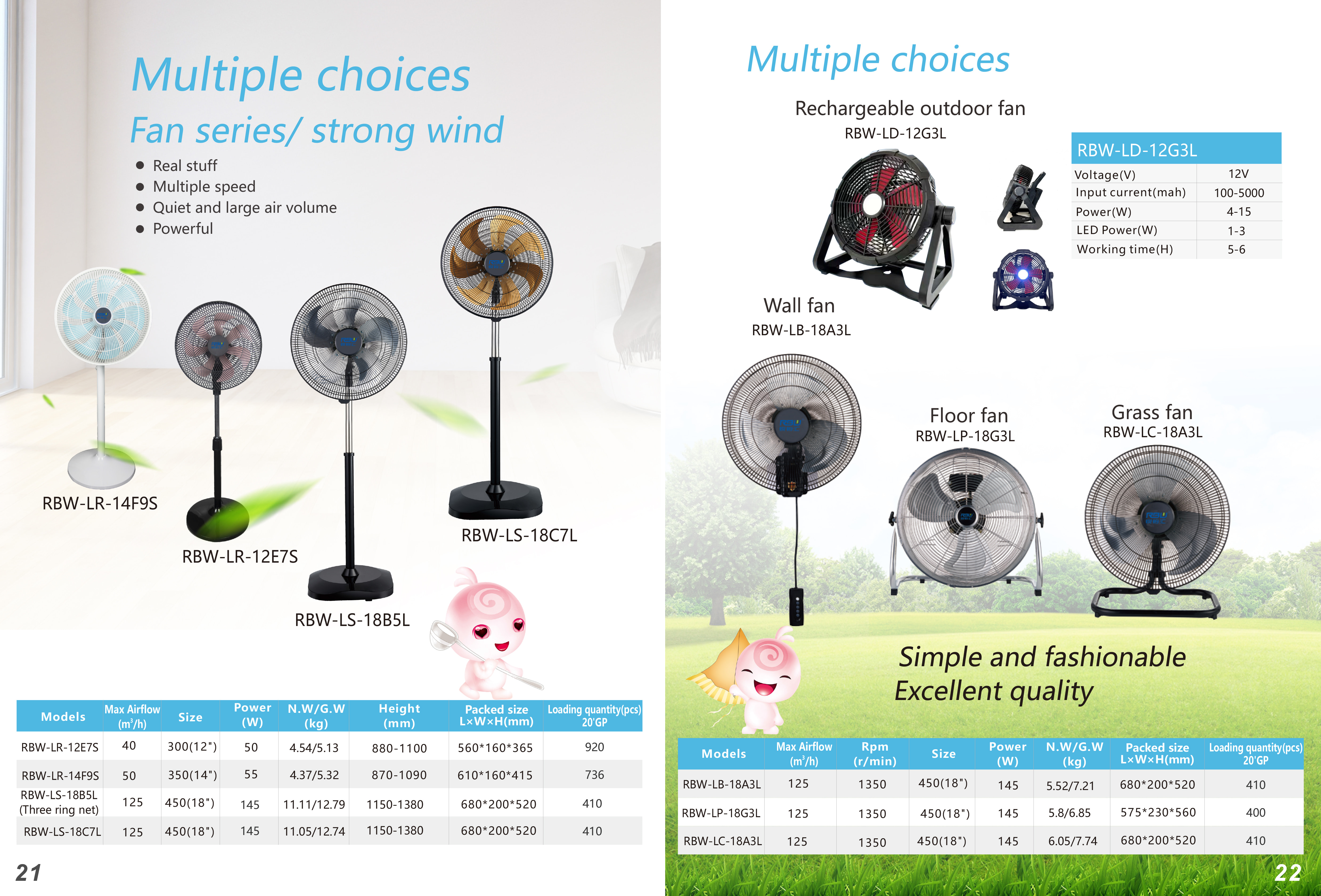
Smart DC Fans (DC Brushless Motors)
Core Motor: Driven by direct current (DC), with a simplified structure (no carbon brushes). Precise speed control is achieved via an electronic chip, allowing a wider range of speed adjustment.
Energy Consumption: Low energy consumption. A DC fan of the same size has a power rating of only 20-40W, which is 1/3 to 1/2 that of an AC fan. It consumes 0.2-0.4 kWh of electricity when running continuously for 10 hours, reducing monthly electricity costs by over 50%.
Speed Regulation & Air Sensation: Precise speed adjustment, supporting 10+ gears or even stepless speed regulation (e.g., 1-32 gears), which can be tailored to different needs (e.g., 1-3 gears for gentle sleep airflow, 8-12 gears for strong afternoon airflow). Some models offer "natural wind" and "sleep wind" modes, simulating outdoor natural airflow for soft, non-irritating air sensation.
Noise Control: Ultra-low noise. DC brushless motors have no carbon brush friction; combined with silent bearing design, noise at low gears can be reduced to 20-30 decibels. Even when the gentle wind gear is used at night, it will not disturb sleep.
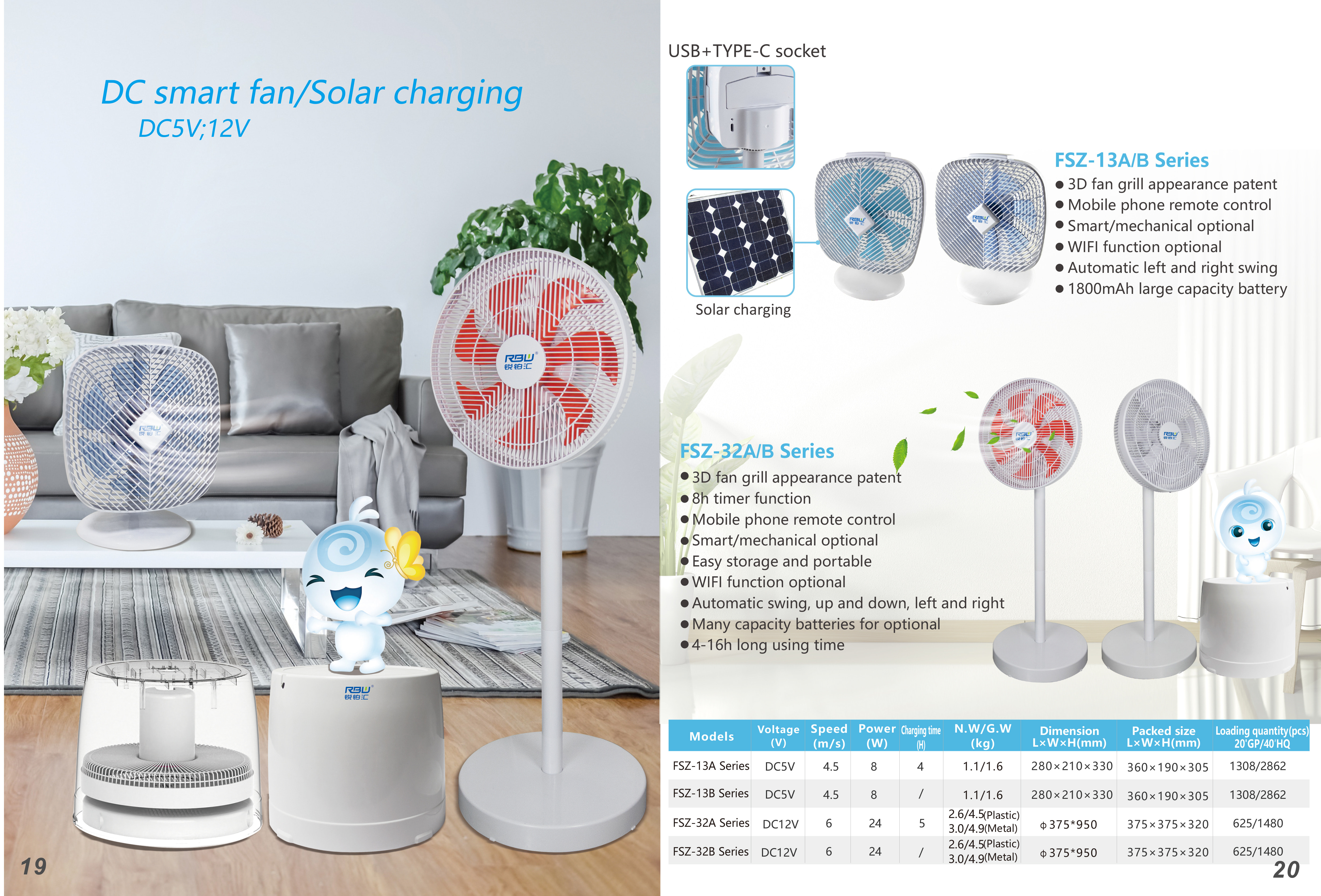
Smart Features: Supports remote control via mobile APP; some models have temperature-sensing automatic speed adjustment and Bluetooth functionality.
Service Life & Maintenance: Longer service life. DC brushless motors have no carbon brush wear, with a service life of 8-12 years. The motor structure is simple, leading to low failure rates. Daily maintenance only requires cleaning the fan blades, with almost no additional maintenance needed.
II. Matching Usage Scenarios & Needs: Choose the Right Fan for More Comfort Different usage scenarios and user needs correspond to more suitable fan types. Based on the above differences, you can select a fan precisely for the following scenarios:
1. Scenarios Where Traditional Electric Fans Are Preferred
Limited budget with basic cooling needs: For short-term use in rental apartments or student dormitories, traditional AC fans usually cost 100-200 yuan, which is more economical than smart DC fans (300-800 yuan).
Low usage frequency with no need for precision: For temporary cooling on balconies or occasional use in garages, complex functions are unnecessary. The 3-5 speed gears of traditional fans are sufficient, and their low cost means no worry about waste when idle (due to low price, storage costs are minimal).
For elderly users who prefer simple operation: Some elderly users are unfamiliar with smart functions (APP, voice control). Traditional fans with mechanical knobs and button operations are more intuitive, requiring no learning of new operating logic and having a low usage threshold.
2. Scenarios Where Smart DC Fans Are Preferred
Long-term use with focus on energy conservation and low noise: For home bedrooms (used 8-10 hours every night in summer) or children’s rooms (requiring low noise to avoid disturbing babies’ sleep), the low energy consumption of DC fans reduces long-term electricity costs. The 20-30 decibel silent design ensures sleep quality, making them especially suitable for light sleepers.
High demand for comfortable air sensation: For offices (where people sit in front of fans for long periods) or bedrooms (needing gentle airflow without direct blowing), the precise speed adjustment and natural wind mode of DC fans prevent issues like "headaches from direct wind" and "harsh airflow," ensuring comfort even with long-term use.
Young families preferring smart convenience: For office workers (who can turn on the fan in advance via APP to enjoy cool air upon returning home) or multi-scenario use (moving between living rooms and bedrooms, with voice control eliminating manual adjustment), the remote control and automatic speed adjustment of smart DC fans greatly enhance convenience, aligning with modern lifestyles.
Small spaces or Mother and Baby Room (maternity and infant) scenarios: For baby rooms (needing to avoid strong direct wind) or small bedrooms (requiring compact design to save space), some smart DC fans are compact (e.g., table-floor dual-use models) and support "gentle wind mode," providing soft airflow for babies. Meanwhile, smart functions allow parents to adjust settings remotely without frequently entering the room to disturb the baby.
III. Buying Tips: Avoid Mistakes and Choose Cost-Effective Products Whether choosing a traditional electric fan or a smart DC fan, mastering the following key points will help you avoid "pitfalls" and select a cost-effective product that meets your needs:
1. Buying Traditional Electric Fans: Focus on Core Performance, Reject "Low-Price Poor Quality"
Check motor material: Prioritize "pure copper motors," which offer better heat dissipation and longer service life than "aluminum wire motors" (pure copper motors run at lower temperatures and are less likely to be damaged by overheating; aluminum wire motors tend to overheat and have a 1-2 year shorter service life). You can judge by weight (pure copper motor fans of the same size are heavier) or check product parameters (those marked "pure copper motor" are preferred).
Check fan blade design: It is recommended to choose fans with 5 or 7 blades—their airflow is softer than that of 3-blade fans (more blades ensure more uniform air cutting, preventing harsh airflow). The blade curvature should be smooth (uneven curvature can easily increase wind noise and disperse airflow).
Check safety protection: The gap in the fan guard should be ≤12mm (to prevent children from inserting their fingers), and the base should be stable (with water-filling or weight-increasing design to avoid tipping). Choose models with "overheat protection" (the motor automatically shuts off when overheated to prevent fire risks).
2. Buying Smart DC Fans: Focus on Smart Experience and Core Configuration
Verify the practicality of smart functions: If you have no smart speaker at home, prioritize basic smart models with "APP control + timer" (to avoid paying extra for unnecessary voice functions). If you often forget to turn off the fan, choose models with "human presence sensing" (auto-shutoff when no one is present, saving energy and hassle). If you are sensitive to temperature, choose models with "temperature-sensing speed adjustment" (no need for frequent manual speed changes).
Check motor and speed adjustment capability: Confirm it uses a "DC brushless motor" (check product parameters to avoid being misled by the "DC motor" gimmick—some low-priced models are actually brushed DC motors with short service life and high noise). For speed gears, choose models with 10+ gears or stepless speed regulation (to meet airflow needs in different scenarios).
Pay attention to detailed design: For fan blades, choose "ABS eco-friendly material" (non-deformable, easy to clean, and more durable than plastic blades). For the base, choose "foldable" or "table-floor dual-use" models (saving storage space and allowing flexible use on tables or floors). Some models offer "oscillation angle adjustment" (e.g., 60°/90°/120°)—choose based on space size (60° for small spaces, 120° for large spaces).


